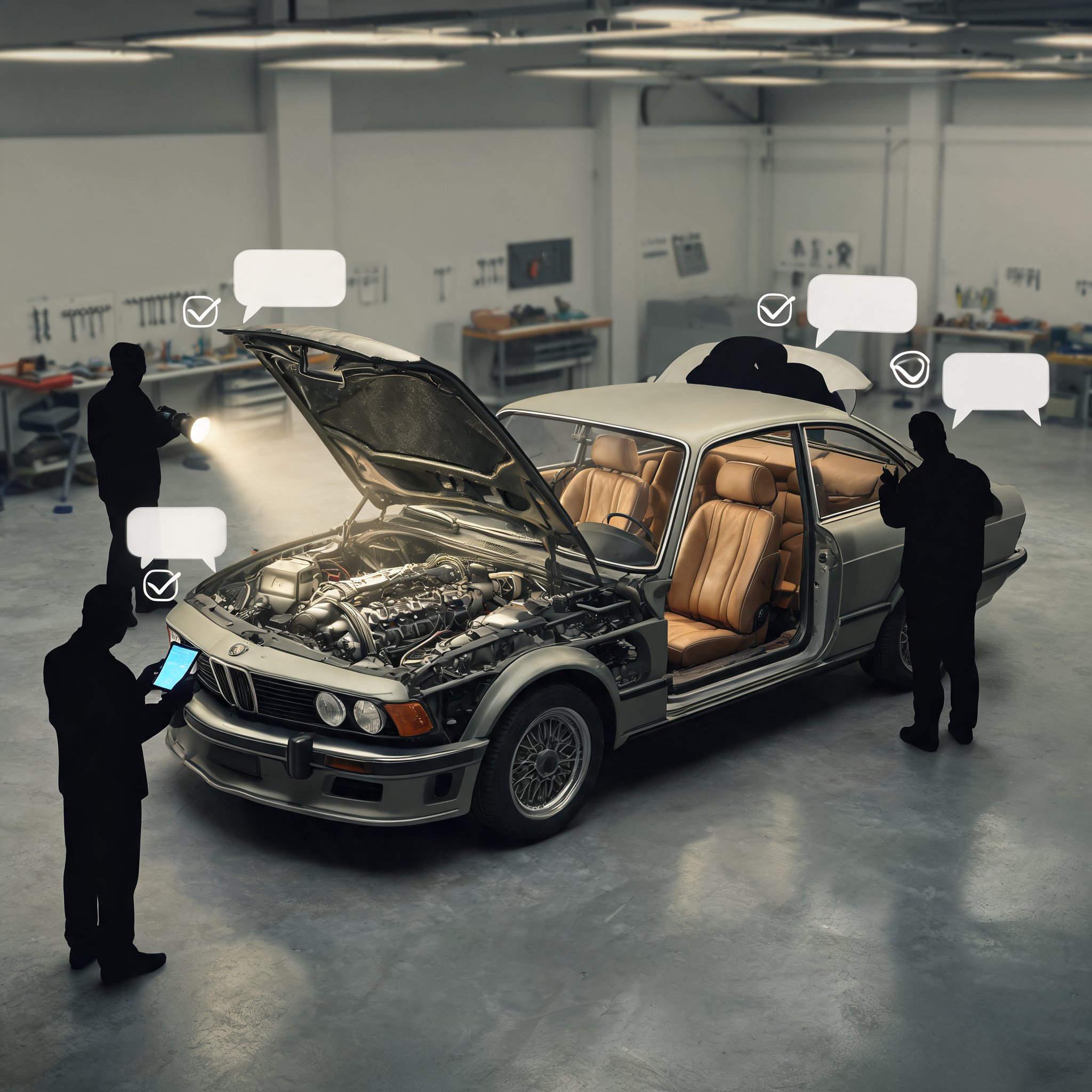
Bring a Trailer’s comment section has become more than a side feature of the online auction site, according to its president. In an interview on The Drivecast, Howard Swig described the community of commenters as the “secret sauce” that makes the platform entertaining and distinguishes it from competitors.
Swig traced the site’s evolution from a simple WordPress blog and online newsletter launched in 2007. In its early years, Bring a Trailer highlighted interesting cars found on eBay, Craigslist and other sites during what he called the golden era of those marketplaces. Enthusiast forums for specific marques were also thriving, and the site built a following by sharing discoveries from across the web.
The comment section became central almost immediately, Swig said. It provides a sense of community, but it also performs a practical function: commenters question listings, check details and, in effect, police the market themselves. The article’s author recalled selling a 1991 BMW E34 M5 on the platform about a decade ago, when commenters quickly began vetting the car. One prolific member of the E34 M5 community looked up the vehicle identification number and posted the car’s full build configuration. Such unpaid due diligence is a familiar part of the Bring a Trailer experience, the author wrote.
That level of public attention is not ideal for every seller. Swig acknowledged that some people prefer privacy and maximum discretion, while Bring a Trailer is a very public forum. He said the site works best when a seller knows the car well and can answer questions or has support in doing so. A late-model sports car with familiar options may need little explanation, he suggested, while an 80-year-old vehicle that has been damaged and restored multiple times and combines original and replacement parts benefits from a detailed public record. Buyers, he added, often want to read a week of comments before bidding on an older car with history.
Swig also addressed sellers who dislike public scrutiny. He said proper preparation matters: listing a car with poor photographs and unresolved issues leaves the seller reacting during the auction rather than presenting the vehicle effectively. Selling is harder work than buying, he noted, but supporting documentation and an accurate presentation can make the process smoother and give the result a better chance of reflecting that effort.
Moderation remains difficult. Swig described commenters as potential first responders to significant issues, while noting that the site removes profanity, inappropriate remarks and other prohibited content. Community members can flag comments as not constructive, a system that has existed since the early days. Some users are upset when a flagged comment disappears, he said, but that often reflects other members’ judgment. He compared moderation to an umpire calling balls and strikes: decisions may not please everyone, even when the goal is to be fair and consistent.
For all the friction, the commenter community has turned Bring a Trailer auctions into a spectator activity. The author points to the attention generated when bidders spend large sums on unusual vehicles, citing $87,000 spent on a 1992 Volkswagen GTI as an example of the public spectacle. Swig’s account suggests that the same open scrutiny can be both the site’s main attraction and its most demanding feature.