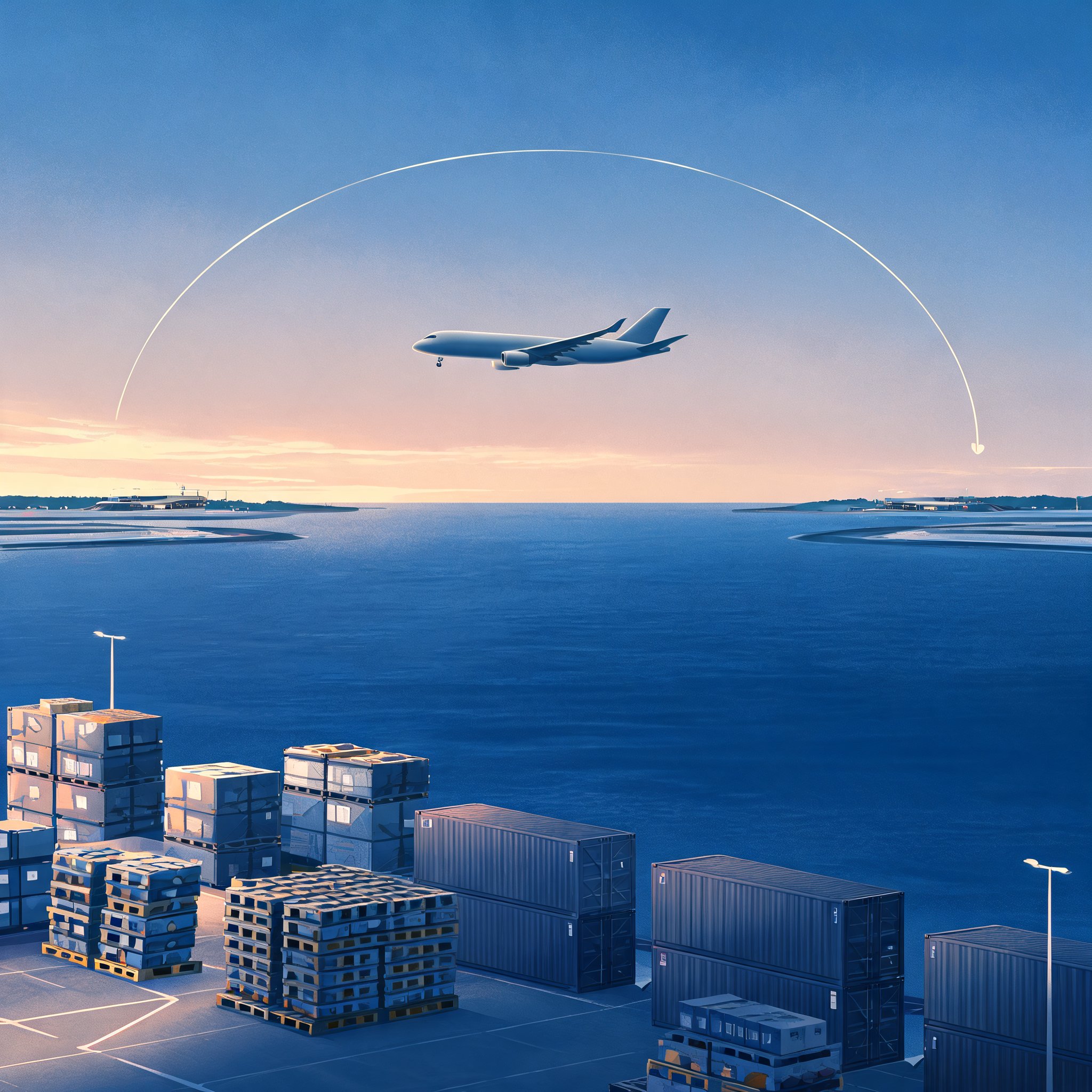
FedEx has added 567,000 kilograms of weekly capacity to its trans-Pacific network, expanding air cargo links between Asia Pacific and the United States.
The capacity is delivered through three routing variations. These connect FedEx's Asia Pacific hub in Guangzhou and its sub-regional hubs in Shanghai, China, and Osaka, Japan, with the company's gateway in Clark, the Philippines. From there, flights continue via Anchorage, Alaska, to the FedEx World Hub in Memphis, Tennessee.
Which markets gain access
Businesses in Singapore, Malaysia, Thailand and Vietnam, as well as Hong Kong, can reach the United States through connections via Clark and Shanghai, according to the company.
The additional lift comes from a Boeing 777F service operating five times a week. FedEx expects it to help customers in advanced industrial manufacturing, AI infrastructure and premium e-commerce handle rising demand.
New Dallas–Fort Worth connection
The enhanced network also introduces a five-times-weekly connection for Asia Pacific customers to Dallas–Fort Worth via Anchorage, providing another gateway into one of the leading US technology and data centre markets.
Salil Chari, president of FedEx Asia Pacific, said global supply chains are becoming increasingly interconnected, particularly across advanced manufacturing, AI-related industries and premium e-commerce. He said the added capacity arrives at a critical time as customers prepare for higher shipping volumes ahead of the year-end peak season, and that businesses need reliable access to capacity, speed and global connectivity to keep supply chains moving. Chari added that the additional flights strengthen links between Asia Pacific and key US markets, including Dallas–Fort Worth, while supporting growth across semiconductors, technology and AI-driven industries.