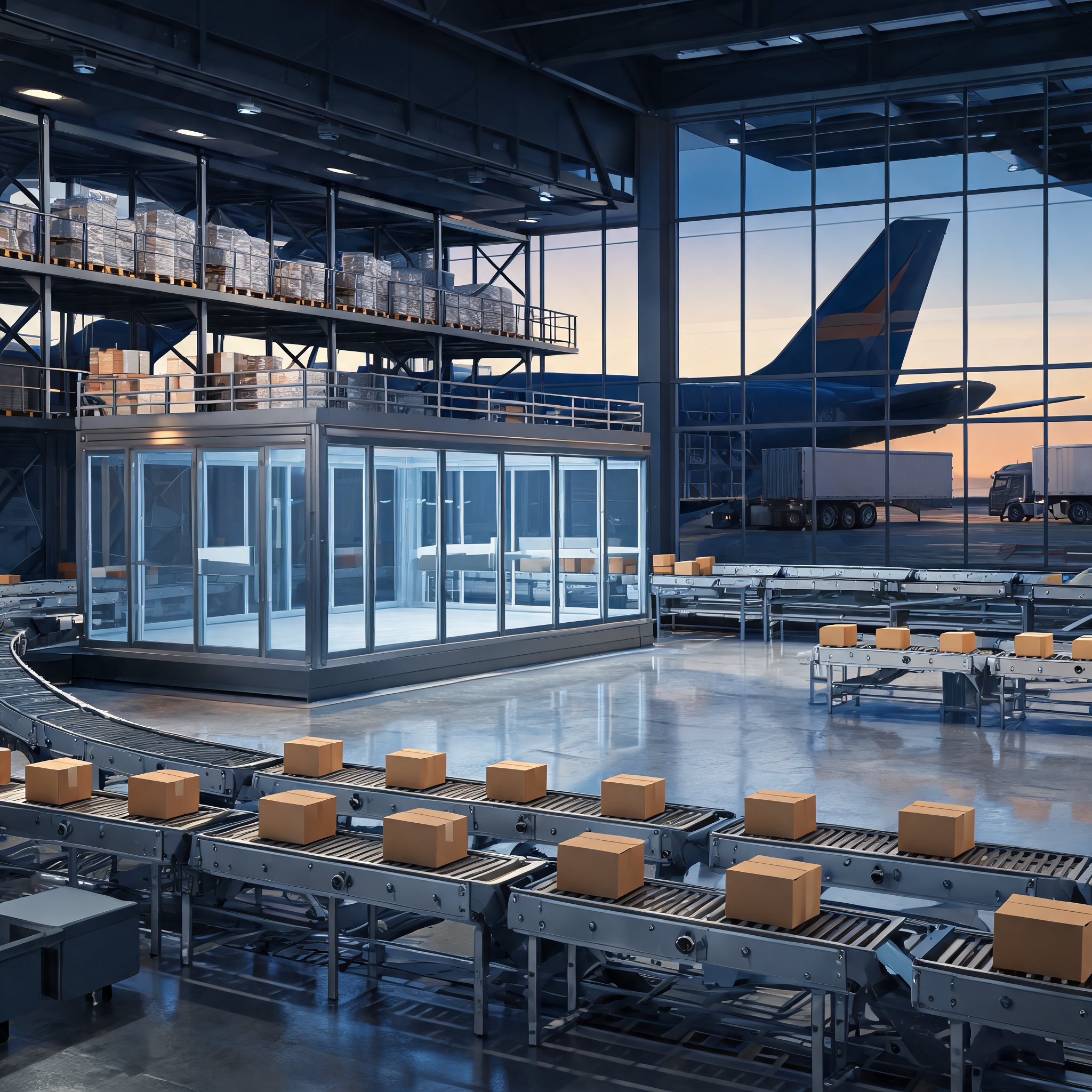
FedEx has opened the FedEx Guangzhou Baiyun Airport International Cargo Terminal 4, a new air cargo complex at Guangzhou Baiyun International Airport that the company describes as a major investment in connectivity between China's Greater Bay Area, Asia Pacific and global markets.
The terminal was developed in collaboration with the Guangdong Airport Authority and covers approximately 45,000 square metres (484,375 square feet). Warehousing, sorting operations and customs supervision are integrated within the single air cargo complex, and the facility is designed to handle both express parcels and freight shipments rather than one traffic type alone.
FedEx presents that single-complex structure as part of the terminal's offer to shippers: express parcels move through automated sortation, while freight shipments rely on warehousing and customs handling at the same site before onward carriage to international destinations.
The facility's intelligent sorting system can process up to 28,000 shipments per hour at peak capacity, more than tripling the previous processing capability, while annual cargo handling capacity at the site exceeds 100,000 metric tons.
The capacity is being added in a region with heavy trade flows. In the first three quarters of 2026, the nine mainland cities of the Guangdong-Hong Kong-Macao Greater Bay Area recorded imports and exports of US$1.26 trillion (about £960 billion), accounting for 21% of China's total trade.
The terminal sits at Guangzhou Baiyun International Airport, the air gateway serving the mainland cities of the Greater Bay Area whose trade volumes FedEx cites in setting out the case for the investment.
FedEx links the opening to that trade intensity. It describes the Greater Bay Area as one of the most dynamic economic regions in the world, and said the terminal expands logistics capacity, enhances cross-border trade capabilities and helps businesses obtain faster, more efficient connections to new global markets.
Salil Chari, president of FedEx Asia Pacific, said the future of trade depends on reliable connectivity, resilient supply chains and access to global markets. He said the investment reinforces the company's commitment to helping businesses in China and across Asia Pacific grow internationally.
Chari added that strengthening connectivity and integrating the facility into the FedEx global network is intended to allow customers to move goods more efficiently, reach new markets and seize emerging opportunities in global trade.
The company said the site expands its operational connectivity in South China and in international markets, with the added parcel and freight capacity intended to feed directly into its wider air network. FedEx did not disclose the value of the investment or the volumes it expects the terminal to handle in its first year.