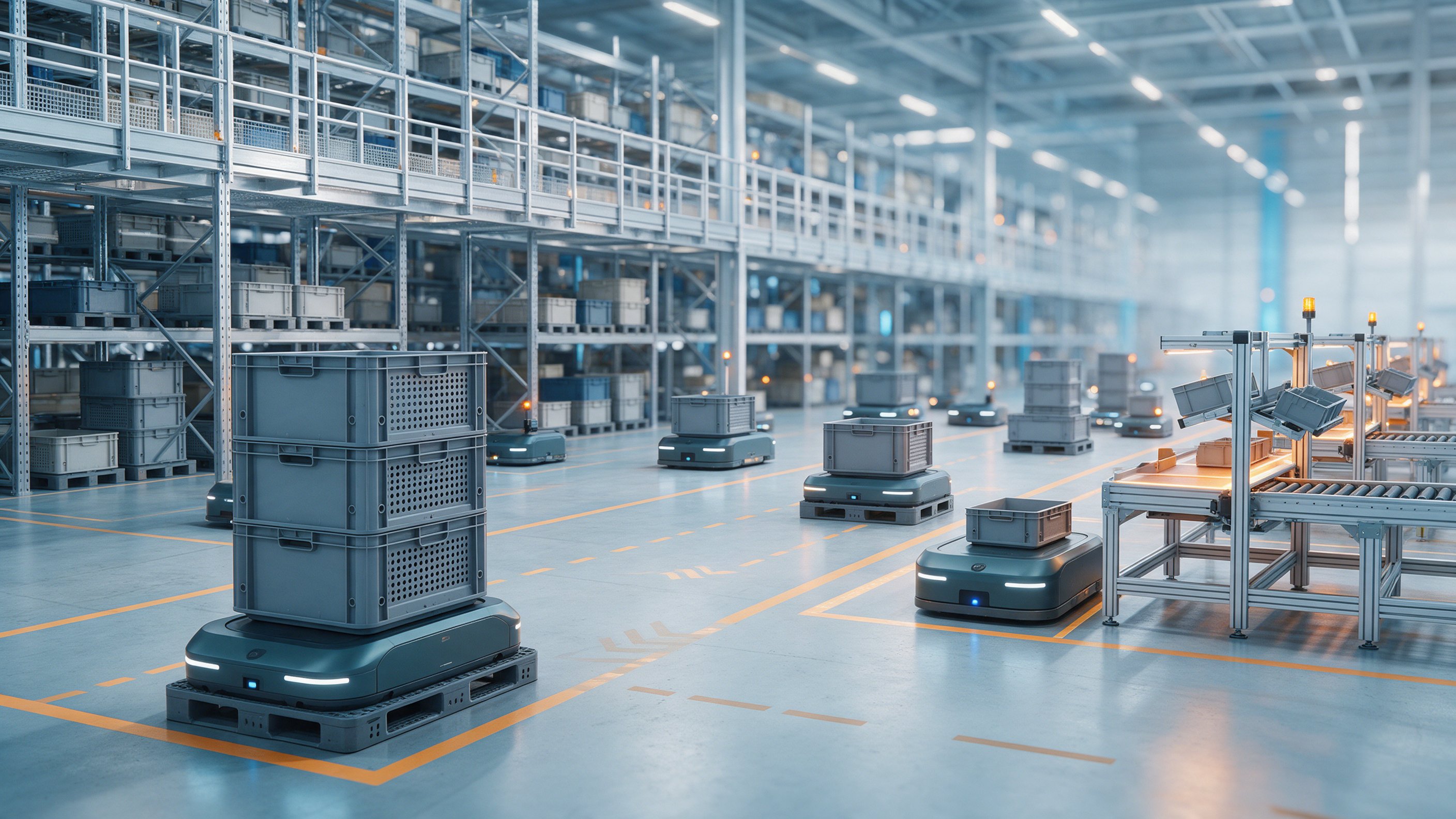
Siemens Smart Infrastructure Buildings' Nuremberg site will bring intelligent robotics into its logistics operations through a new partnership, with Hellmann Worldwide Logistics working alongside automation specialist Exotec to automate storage, order fulfilment and the movement of materials inside the facility.
Hellmann has operated the warehouse at the Nuremberg site as a full-service logistics provider for Siemens Smart Infrastructure Buildings since 2025, and the robotics project extends that existing arrangement into automated operations.
What the robots will do
Under the plans, autonomous robots will store and retrieve goods and transport totes to the picking stations. The installation is intended to create additional capacity that supports the site's anticipated growth while improving efficiency, quality and space utilisation.
The system will initially offer around 35,000 storage locations and is designed to scale as demand increases. Storage capacity and picking stations can be added flexibly and with minimal effort, according to the partners.
That modular approach means the site can start from a defined footprint and extend later, adding storage positions and picking stations in steps as volumes change rather than fixing the layout at launch, a design the partners link to expected annual volume increases.
Timeline and rationale
The new system is scheduled to go live in mid-2027, timed to support future growth and anticipated annual increases in volumes at the site.
Daniel Schnuck, director global warehouse at Siemens Smart Infrastructure, said that introducing the automation solution at the Nuremberg site creates a foundation to support future growth, to keep improving operations and to ensure a consistently flexible and high level of service for customers over the long term.
Who does what
The arrangement divides the work between the two partners. Hellmann runs the Nuremberg warehouse on site as the logistics service provider, while Exotec supplies the robotic system that stores and retrieves goods and delivers totes to the picking stations.
Smart building context
The site belongs to Siemens' Smart Infrastructure Buildings portfolio, which the company describes as able to manage its own energy demand and generation dynamically. That capability relies on a bi-directional energy flow between on-site generation and storage systems and the outside electrical grid, allowing a smart building to balance supply and demand and help eliminate energy waste and reduce greenhouse gas emissions.
In the published details, the logistics automation and the building's energy-management capability are presented as separate strands of the same site rather than as a single integrated project.
For the Nuremberg operation, the stated aims are capacity and service quality: more storage positions, flexible picking stations and a layout that can absorb expected volume growth after the mid-2027 launch.