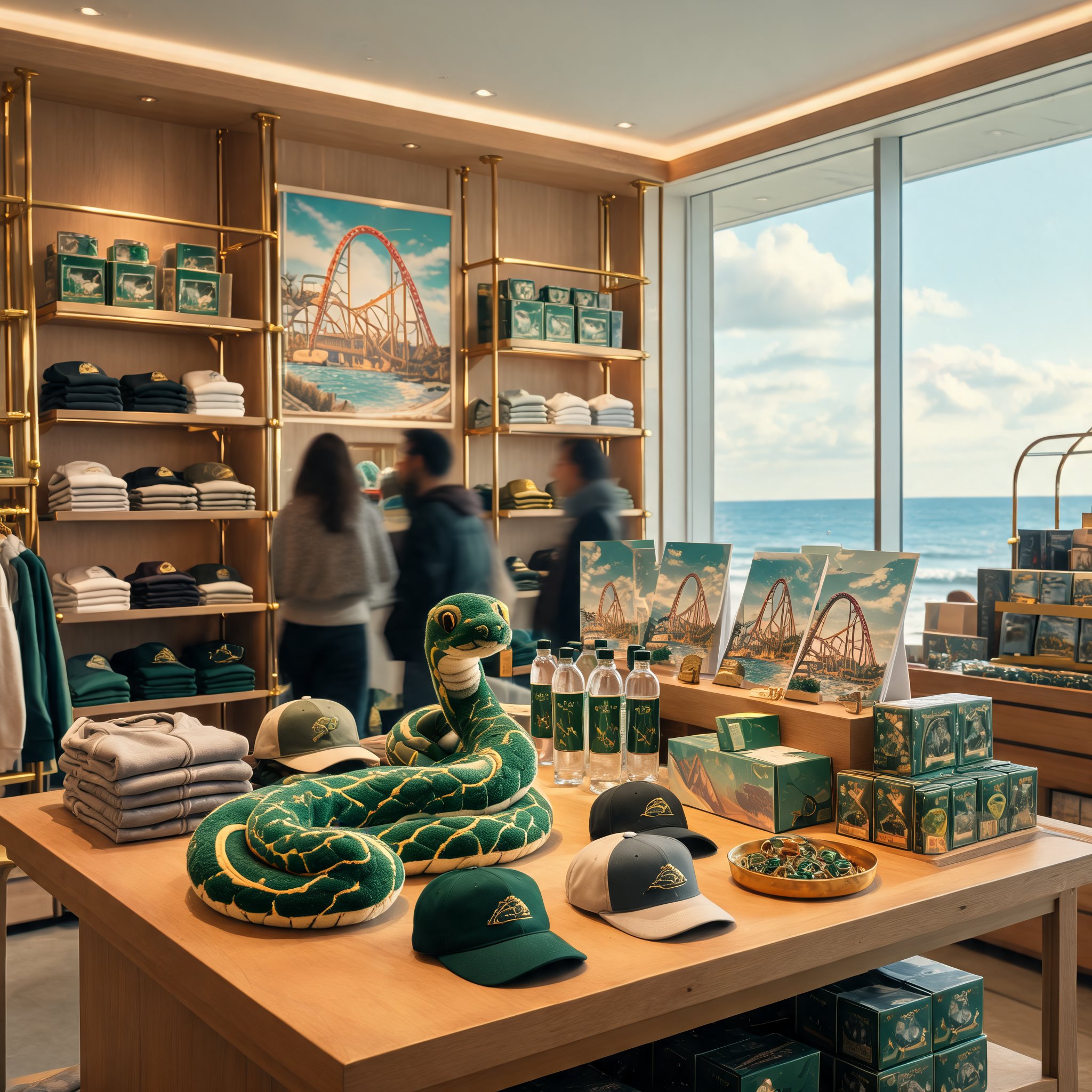
Pleasure Beach Blackpool is making merchandise and retail a core part of the guest experience rather than an exit gift shop, according to head of retail Damian Jackson. The 130-year-old seaside amusement park, known for classic wooden roller coasters, the Big One and live shows, runs a flagship store at its main entrance in the Casino building, with further outlets across the site.
Jackson oversees physical stores, e-commerce, ride photography and product development. He works with Amanda Thompson from the initial concept through the design brief, sampling and final approval. He says every range must have a reason to exist, a clear target customer and an authentic connection to the resort, rather than simply carrying a logo.
Different guests, different purchase missions
Pleasure Beach serves families on first visits, school groups with limited spending money, teenage friends, couples, international tourists, lifelong fans and serious coaster enthusiasts. A family may want a traditional reminder of the day, while an enthusiast may seek an accurate collectable tied to a particular ride. The team combines sales data with time in shops, staff feedback and guest comments. It asks whether a product would be worn away from the park, displayed with pride, excite a child or genuinely recall a family visit.
The range is built around customer missions and price levels: confectionery, magnets, keyrings and badges as impulse buys; bottles, bags and ponchos as practical items; fashion-led apparel and accessories; children’s products and plush; and premium or limited-edition pieces for collectors. Attraction-specific lines sit alongside wider Pleasure Beach branding, licensed ranges, playful products and heritage collections. The aim is a carefully edited range in which each product has a purpose, audience and price.
Aviktas shows the value of early retail involvement
The Aviktas range was developed around the new attraction’s visual world, including its golden snake, emerald colouring, mythology and sense of mystery, rather than as a set of products carrying a ride logo. Retail was involved early in the attraction’s development. A run of 50 models priced at £250 each sold out, which Jackson cites as evidence that authentic, detailed limited editions can attract collectors.
The creative process starts with discussions about the attraction, its audience and the opportunity for a range. The team considers story, visual identity, emotional impact, fashion relevance and long-term role in the wider portfolio. ICON lends itself to a clean, contemporary, fashion-led approach, while heritage rides such as the Big Dipper and Grand National draw on archive artwork, engineering details and nostalgia. Materials, colours, proportions, trims, embroidery, packaging and shop presentation are reviewed alongside demand, price, production quantities, lead times and sales locations.
Heritage, playfulness and licensed brands
Nostalgia matters because the resort has been part of family traditions for 130 years. Its archive of attraction imagery, typography, posters, architecture and stories can be reinterpreted through contemporary apparel, homeware and collectables. Playful products using humour, colour and characters broaden the offer for children, families and casual visitors. Licensed brands such as Nickelodeon and Aardman require close work with IP owners and approved suppliers on brand guidelines and approvals, while exclusive designs and location-specific details help differentiate the shops from general online retailers.
Jackson says guests increasingly want products that feel exclusive, authentic and considered, including attraction-specific merchandise, premium apparel, subtle branding, collectables, limited editions and items with a clear story. They also want products that work beyond the visit, such as a well-designed hoodie, cap, bottle or bag. Generic souvenirs and heavily branded items with no extra story have become less compelling, although keyrings, magnets, mugs and confectionery remain important and must keep evolving.
Retail basics, staff and e-commerce
Stock accuracy and availability are among the least glamorous but most critical parts of the operation. Jackson points to accurate deliveries, stock movement, replenishment, pricing, signage and daily compliance checks. Clear pricing builds trust, strong housekeeping makes products more appealing, and effective replenishment prevents missed purchases. He describes the best suppliers as creative and commercial partners that understand the brand, respond to feedback and reliably deliver on quality, communication, lead times, compliance and pricing.
Presentation, location, storytelling, pricing and team confidence all influence whether visitors buy. A clear price architecture lets guests enter a range at different levels, from a small memento to a premium collectable, while better materials, detail, exclusivity, personalisation or bundles can encourage trade-up. Product adjacencies also matter, such as a plush character with an outfit, a ride photograph with a frame, or apparel with matching accessories.
Retail is planned as another chapter of the day, not an obligatory stop at the exit. Themed environments, demonstrations, characterful displays, confectionery experiences, personalisation, ride photography and interactive selling can make shopping entertaining, and each shop is meant to reflect its location. E-commerce extends the relationship year-round, reaches enthusiasts and remote customers, tests interest and reveals demand. Staff act as hosts, storytellers and brand ambassadors, while gift wrapping and personalisation add value that is difficult to replicate in a general online marketplace.