The Floating Farm in Rotterdam is changing direction again. The platform, launched in 2019 as a way to produce food in a port without tying dairy farming to traditional land, is no longer being sold, and its cows have been moved to nearby farms while a vertical growing operation expands inside the structure.
The project was conceived by Peter and Minke van Wingerden, who invested €4 million in a facility originally equipped for on-site feeding, milking, slurry handling and dairy production. It opened in May 2019 in the Port of Rotterdam and supplied milk and dairy products to local consumers through vending machines. Its visible herd and unusual setting attracted hundreds of thousands of visitors from around the world.
Sale plan set aside after dispute
The owners had recently put the farm up for sale after a disagreement with the local environmental department, which said a newly fitted floor did not meet regulations. At that stage, the 28 Dutch MRI cows had been removed, were due to be sold, and milk production was expected to stop.
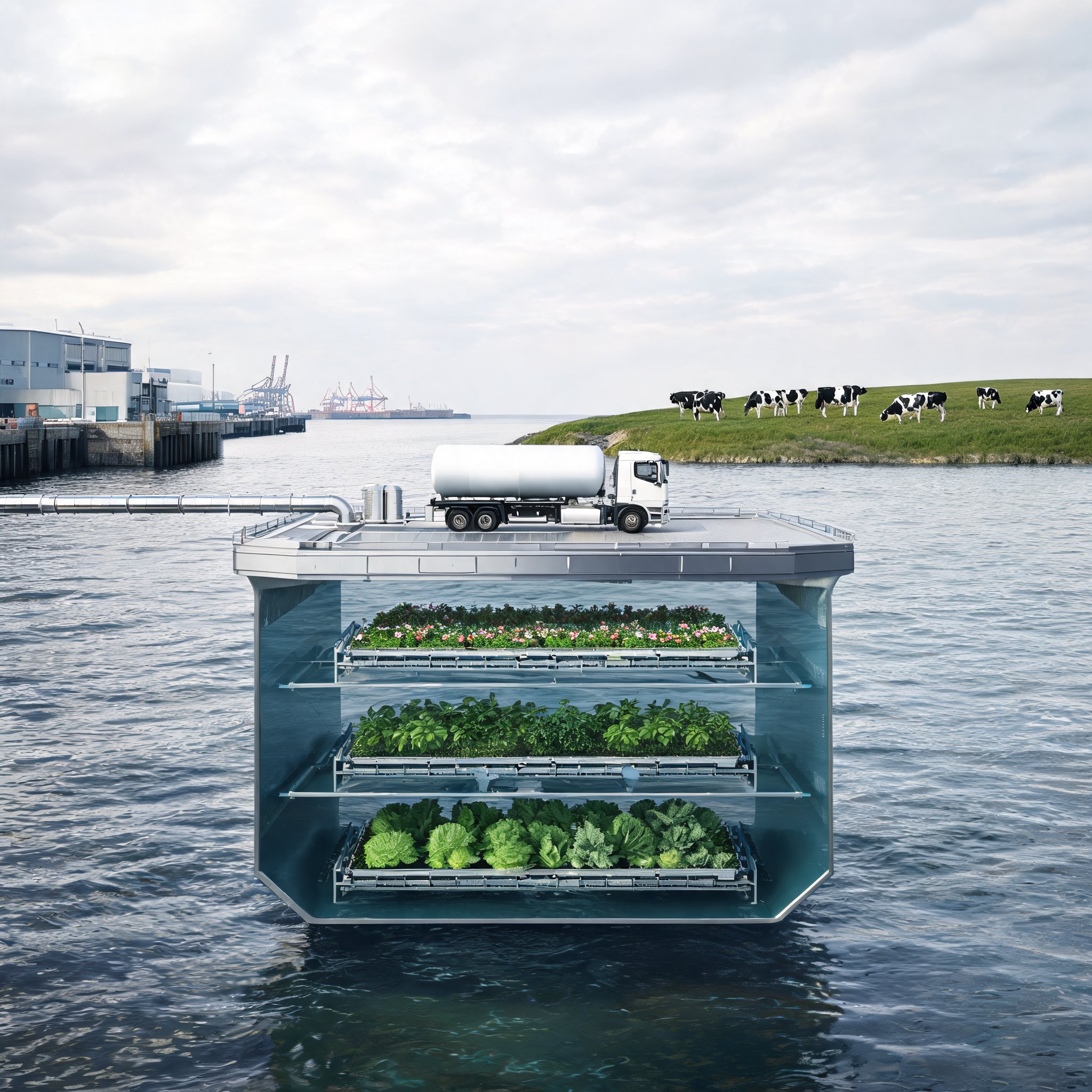
The position has since changed. The farm is not being sold, the cows have been placed on several farms about 20 km away, and a vertical salad-growing enterprise occupies the basement of the floating structure. Peter van Wingerden confirmed that production of milk and other dairy products was continuing and that the vertical farm was performing well.
Milk brought in for processing
With the cows no longer housed on the platform, milk is supplied from nearby farms. Van Wingerden said a regular dairy truck brings milk to the floating site about twice a week, with each batch amounting to roughly 1,500 litres. The supplier is about 20 km away, keeping transport time short, he added.
He also addressed the regulatory issue behind the sale plan. According to van Wingerden, the farm’s modern technology and system keep emissions as low as possible, but the rubber floor was made in Germany and has no certificate of compliance in the Netherlands. He said a stainless steel pipeline runs from the quay to the farm.
Three growing layers below the waterline
The vertical unit is a fully controlled, automated growing space with three layers and conveyor belts, combining grow-room and warehouse technology. It sits below the waterline in the floating farm, where it is cooled by the water. Four groups of crops are grown: micro-greens harvested every two weeks, herbs every three weeks, leafy greens every four weeks, and edible flowers every four to five weeks.
These crops are used to make tea, pesto, herb-infused salts and herb-infused whey, alongside the farm’s Parmigiano cheese, according to van Wingerden.
Port site has a fixed horizon
The floating farm will have to leave the port in just over two years because the entire area is due to become residential. Van Wingerden said this was not the vision the project began with, but that the operation was adapting to the system it now has.