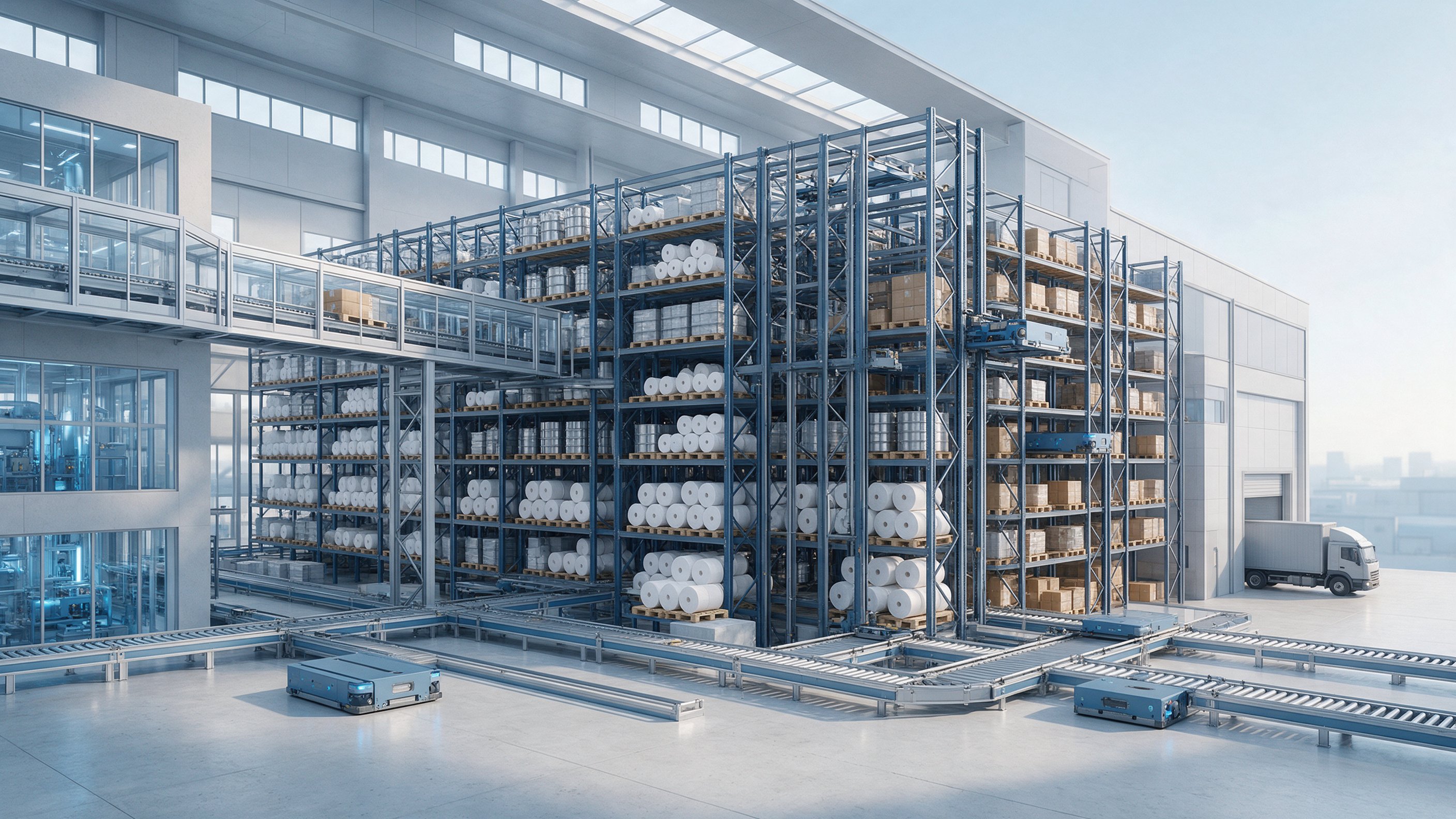
Toyota Automated Logistics (TAL) has been commissioned by Papastratos, a Greek manufacturer and key production hub for Philip Morris International, to design, supply and install a comprehensive automated intralogistics system. The project covers full warehouse automation and a set of integrated systems at the Papastratos operation.
TAL will implement a fully automated high-density pallet warehouse using 4-Way Shuttle Technology. Conventional racking for the installation will be supplied by Toyota Material Handling Greece. The scope also includes automated conveyor systems, vertical lifts and a bridge connection between buildings, allowing automated pallet transport across the entire facility.
Once complete, the integrated system is intended to manage the automated storage and movement of raw materials, semi-finished products and finished goods. The companies say it is designed to ensure efficient and reliable material flow through the manufacturing process while providing a high level of operational flexibility.
The project was developed in close cooperation between Papastratos, PMI's central engineering and project teams, TAL and Toyota Material Handling Greece. Thomas Hibinger, CEO of Toyota Automated Logistics for EMEA and APAC, said the project supports Papastratos' investment in Greece and Europe by turning automation into a sustainable operational advantage. He said the collaboration connects automated storage and material transport with manufacturing, helping Papastratos improve processes, gain greater control and make better-informed decisions, with support for continuous optimisation beyond go-live. Hibinger added that the systems are intended to help keep manufacturing in Aspropyrgos competitive and fit for the future.